Project brief
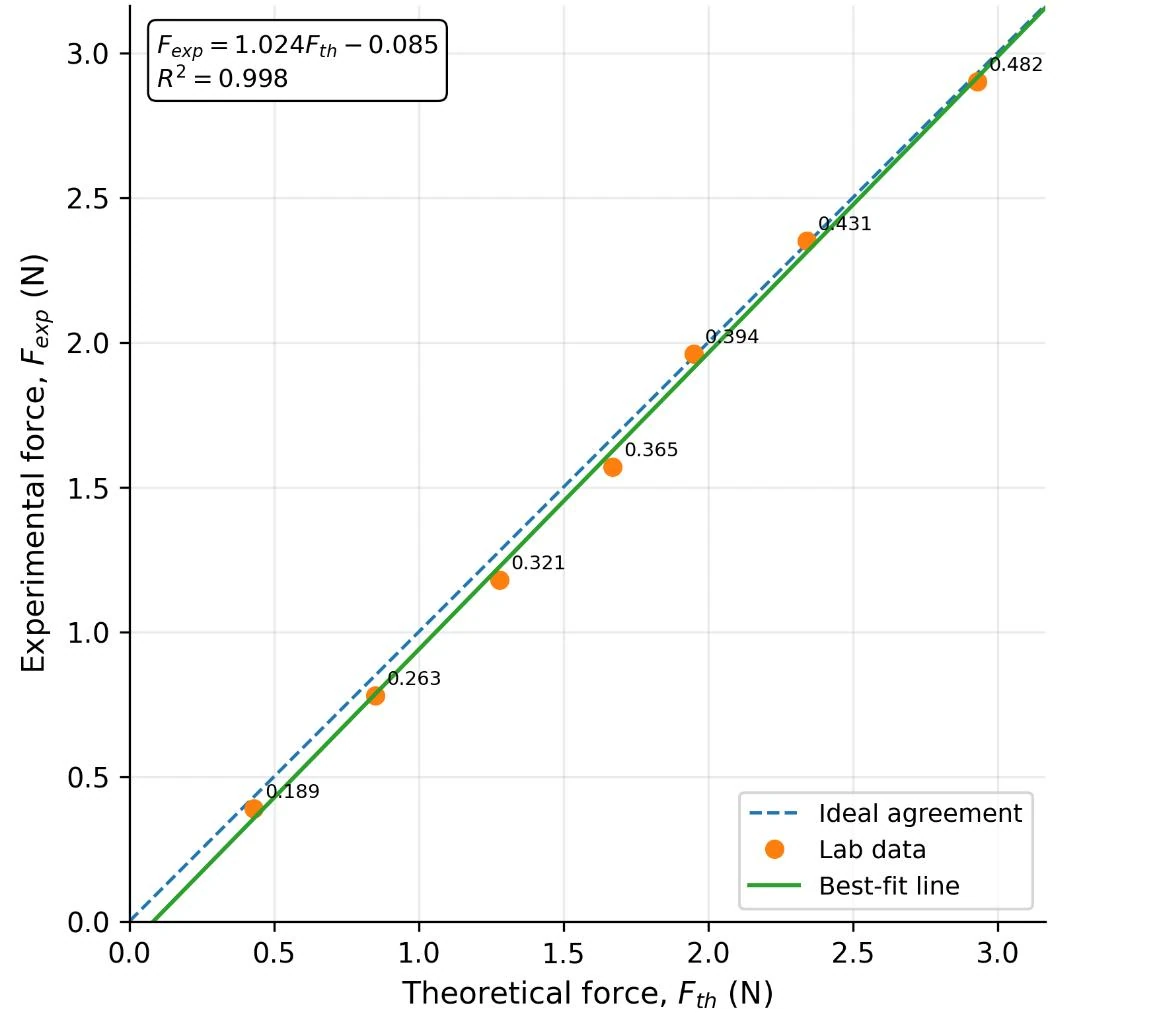
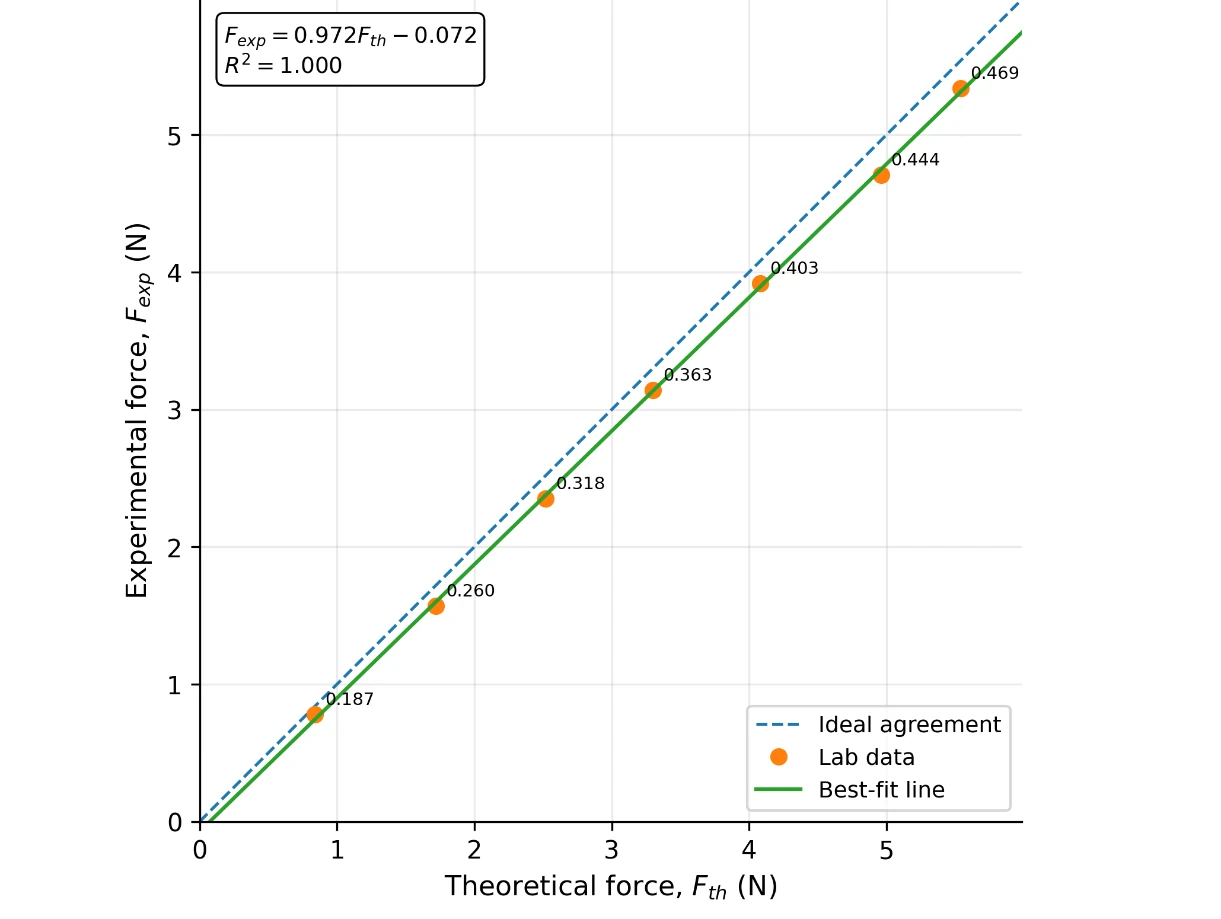
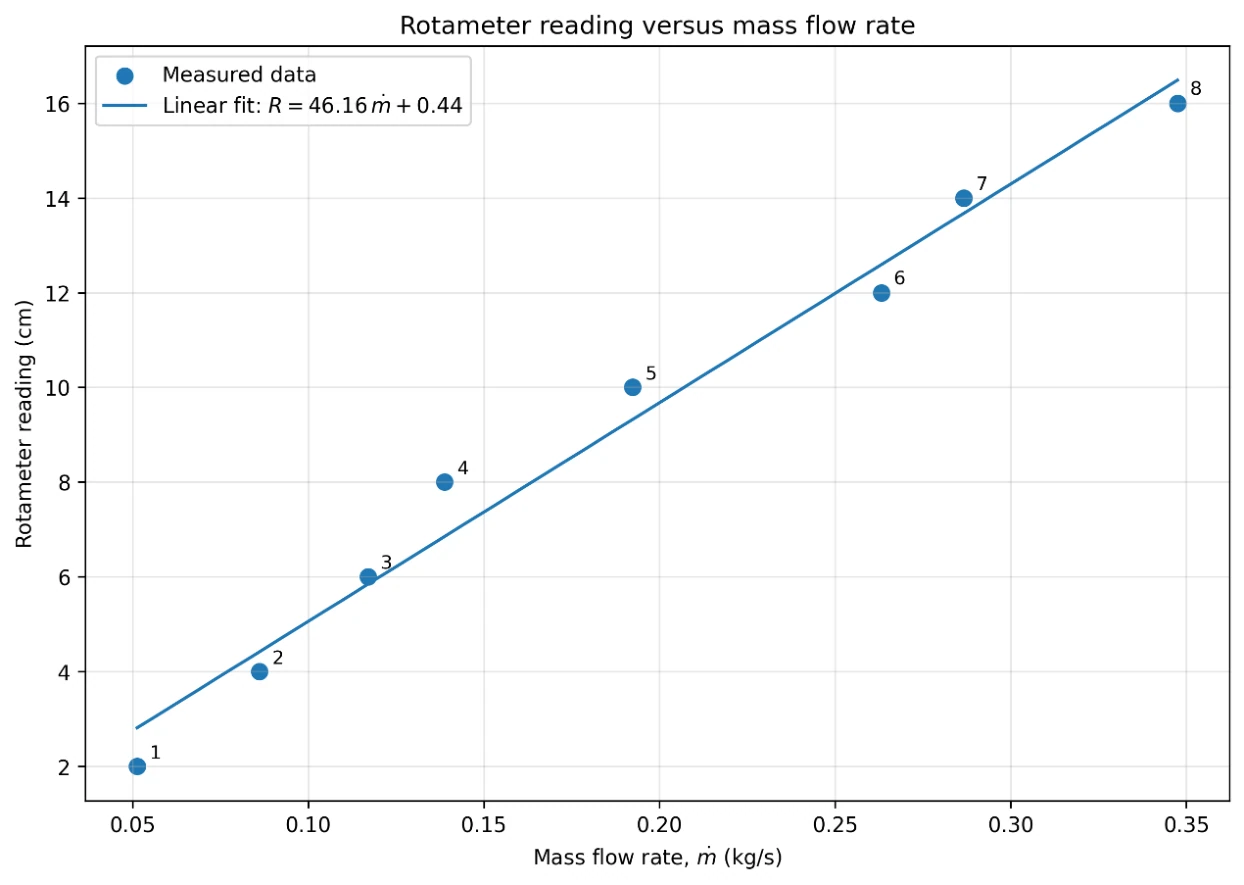
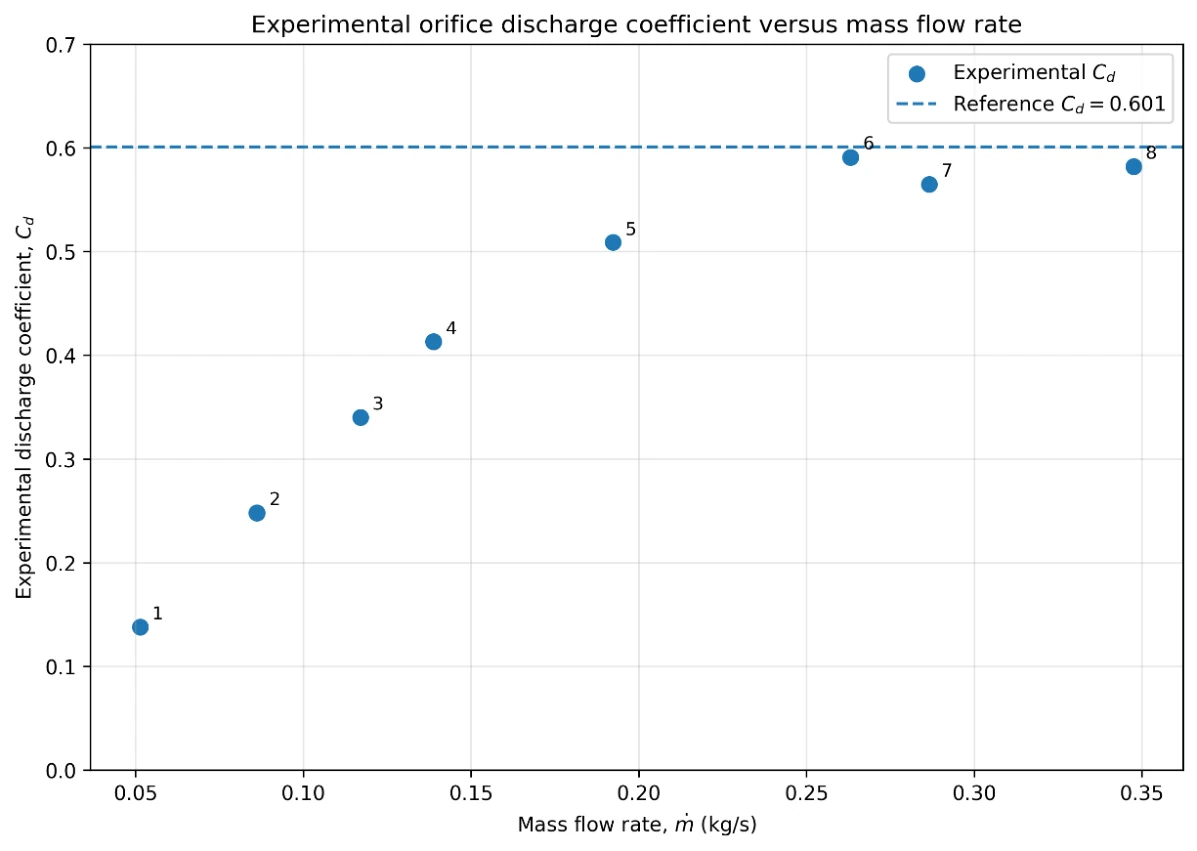
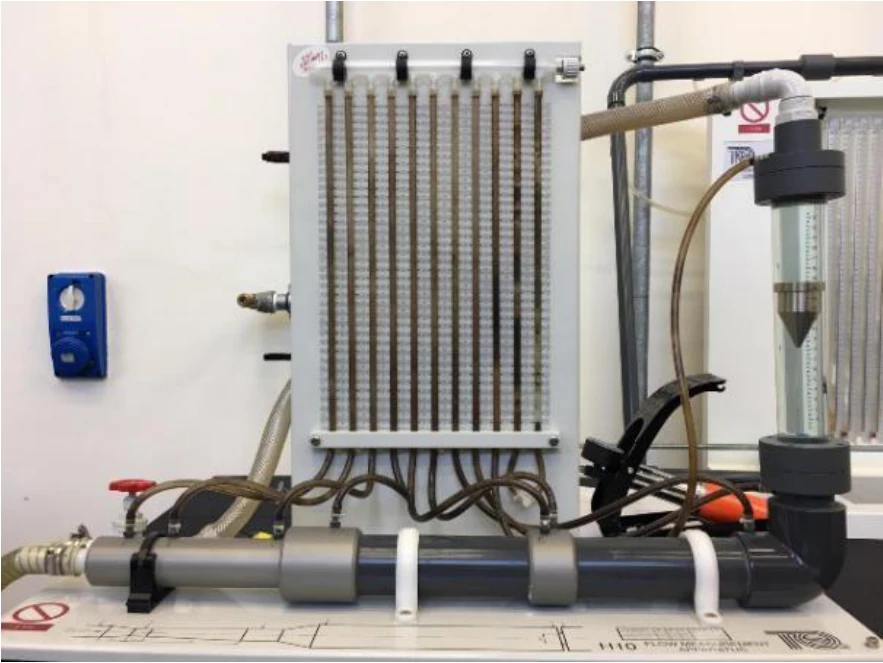
This combined fluid-mechanics investigation uses two laboratory rigs to examine conservation of momentum, continuity and steady-flow energy. The jet-impact experiment compares a flat plate with a hemispherical cup at seven flow conditions per target. Timed water collection gives mass flow, nozzle and impact velocities establish theoretical momentum force, and a balanced lever mechanism provides the experimental reaction. Separate force plots make the response of each target visible against ideal agreement and a fitted trend. The flow-measurement experiment records manometer levels across a Venturi, enlargement, orifice, elbow and rotameter. Bench discharge is compared with pressure-based estimates, while calibration curves and experimental discharge coefficients describe the instruments across the recorded range. The analysis retains measurement uncertainty as part of the engineering result: the lowest-flow Venturi point is inconsistent, low-flow discharge coefficients differ from the reference, and some corrected losses are nonphysical. These observations are treated as limitations rather than useful energy gains. The retained flow calculations also depend on the original report’s stated collection-mass assumptions. Together, the source apparatus image, target-force comparisons and meter plots show how physical theory can be tested with real instrumentation. The workflow makes the distinction between raw measurements, derived quantities and interpretation explicit, and shows why instrument limitations must be carried into final engineering conclusions.
The engineering challenge
Compare theoretical forces and flow estimates with laboratory readings that include timing, alignment and manometer uncertainty.
Engineering approach
- Measure jet reaction for flat and hemispherical targets at several flow settings.
- Calculate momentum force from timed collection and corrected impact velocity.
- Convert manometer readings into venturi and orifice discharge estimates.
- Fit rotameter calibration and examine discharge coefficients and head-loss trends.
- Identify inconsistent readings and document their effect on interpretation.
Results & observations
Report average experimental force divided by jet momentum J.
Report average experimental force divided by J; ideal full reversal gives 2.
Calculated with the report’s assumed collected-water masses.
Test 8 experimental discharge coefficient; reference coefficient 0.601.
Features & capabilities
- Two jet-target geometries
- Measured-versus-theoretical force plot
- Rotameter calibration curve
- Experimental discharge coefficients
- Component head-loss comparison
- Explicit measurement limitations
Software & engineering tools
Impact-of-a-jet apparatus, H10 flow measurement rig, Manometers, Timed collection, Momentum and Bernoulli equations